Ten elements of great communication
Communicating effectively is really hard. I went to university for three years to learn how to do it well, and I still have much to learn.
Covid has highlighted just how hard it is.
We have seen our politicians, policymakers, medical professionals and bosses let us know what is going on with varying degrees of success.
Communication is made even harder because it seems easy. People think, “I can write an email, so I must know how to communicate well”. I think we all know that’s not correct :)
Really effective communication is hard because it is extremely nuanced and has many moving parts.
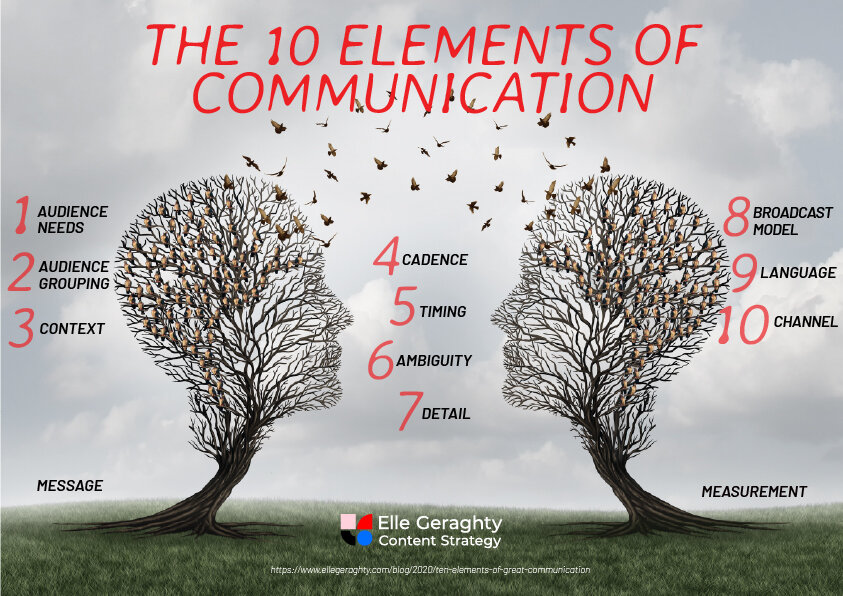
The ten elements of great communication
To communicate with excellence, you need to consider these ten elements:
Audience needs
What do the people you are talking to care about or need to do? What is their emotional state? What is going on with them right now? What is their communication style? What is their interest level?
Audience grouping
Do you talk to people individually or in a group? How do you form those groups?
Context
What is going on in the world that may intermingle with your communication attempt?
Cadence
How often do you communicate? Once a week or once a month?
Timing
Do you communicate earlier or later on?
Ambiguity
What happens if you are not quite sure what is going on? When do you communicate and what information do you share?
Detail
Do you go high level or get into the granular detail?
Model - broadcast v conversation
Do you just send your message out, or do you set up space for back-and-forth conversation? How might that change over time?
Language
How formal do you need to be? What tone will help you communicate?
Channel
What tools do you use to communicate? Do you have a conversation or do you send an email?
What this sits on
And of course, all this sits on two key bases.
Message
Do you know what you want to say?
Measurement
Do you know how to measure if you have been effective?
Some questions for you
Are you happy with this list or would you add anything else? And what do you think about the order of elements? I have deliberately added channel last. How does that sit with you? I’d love to hear your feedback :
A note on technology
Human communication is tech-neutral. Examples of communication tech are paper and pens, radio waves and the internet. We have a tendency to let those channels dominate and determine the way we communicate. But really it should be the other way around. Who are you talking to? What do they care about? What do you need to convey? The mechanism you use to communicate will always be secondary to those things. Read more about prioritising communication over tech.
Download a poster for your wall
If you are currently working in the office this will be great for your desk visitors to see :) Start a conversation about the complexities of your craft!