Four kinds of content
The word ‘content’ is both fabulous and downright unhelpful.
It’s a great all encompassing word to describe movies, stories, instructions, emails, recipes, illustrations, interviews, products, profiles, videos, social media, advertising and so much more. But that broad definition can also cause confusion and incorrect assumptions.
Different people use the word ‘content’ to mean different things.
I don’t really mind that ambiguity because with each engagement we need to sit down and consider objectives, context, audience and timeframe to build a working definition of content that is right for our exact purpose. A purpose which may change over time.
And I think that’s is a good thing. It forces us to be purposeful and focussed on outcomes.
In saying all that, it is helpful to do some thinking about common ways to define big chunks of content.
So here is one way. Let’s define content based on its function.
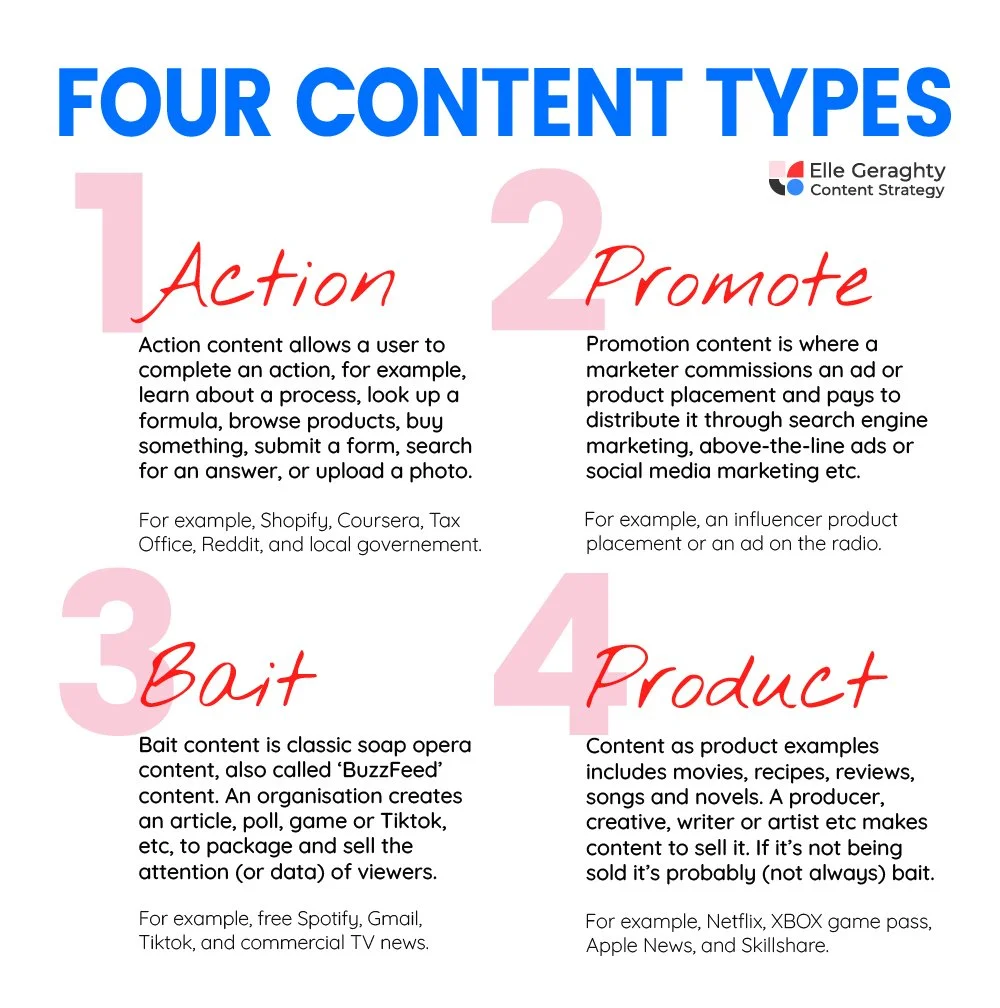
1.Action content
Content that helps people get stuff done. This is most of the content that I work with day to day. It includes government service centres, retail stores, social media, libraries, and insurance websites. People come to these digital places to do things, for example, learn, share, communicate or buy.
2.Promotion content
Content that helps promote stuff. Mostly made (and paid for) by marketers and other experts, this is content that is designed to entice, persuade and convince people to buy stuff and do things. I say mostly, because promotion content can also be made by non-professionals with no budget, for example, community groups and small businesses. It does generally cost money to distribute this kind of content though, for example through search engine marketing or an above-the-line ad campaign.
3.Bait content
Old fashion soap opera content. In the 1930s soap manufacturers commissioned TV shows with the express purpose of gathering people's attention (or eyeballs) and delivering ads to them. It's the old bait and switch. In the 2020s we talk more about clickbait or outrage-based ‘journalism’, but it's pretty much the same thing. As the saying goes, If you are not paying for content (or product), you or your data is probably the product.
4.Product content
This is content that people pay to watch, listen to and experience, for example, TV shows, movies, albums, and books. There is sometimes a confusing overlap between ‘bait’ content and product content but generally, the distinction is the cost to consume. This is content as commodity.
How does this categorisation sit with you? Is it useful? How would you augment it?
Application
This model is particularly useful when content is being manipulated to do too many different things and ends up doing none of them well. It gives you a reference to stop, pull back and ask the question, “what kind of content is this and what are we trying to do with it?”
Fuzzy edges
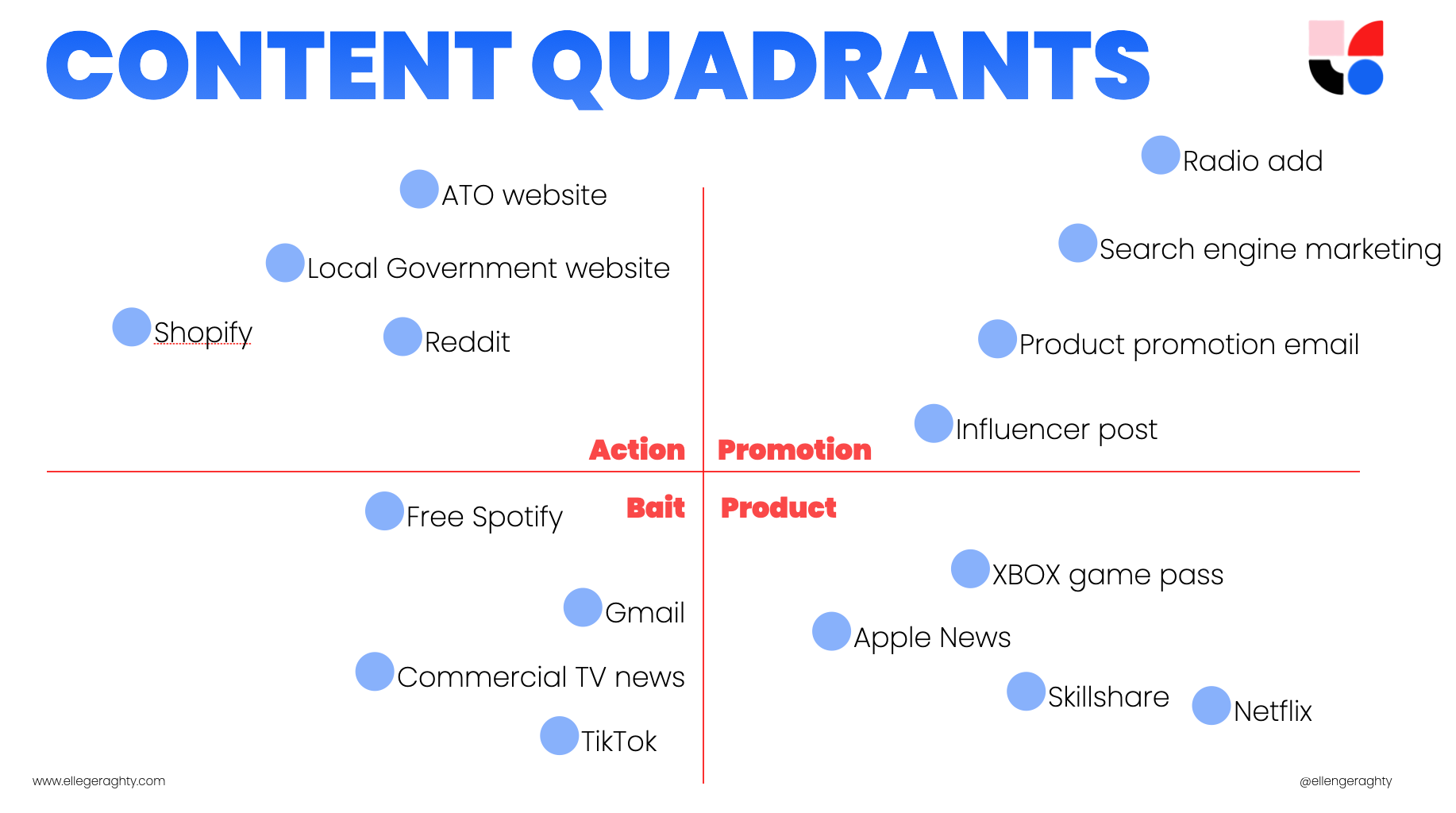
This is not a crisp model. The edges between these categories are fuzzy.
McDonalds famously commissioned a Spy Kids movie because they didn't want to pay royalties for the figurines to go into their happy meals. The cost of the movie was worth the savings on royalties. Don't ask me to categorise where that movie fits!
In other examples, we may need content that facilitates and promotes at the same time. We may charge a small price to the consumer but also largely rely on advertising for our bottom line.
What other examples can you think of?